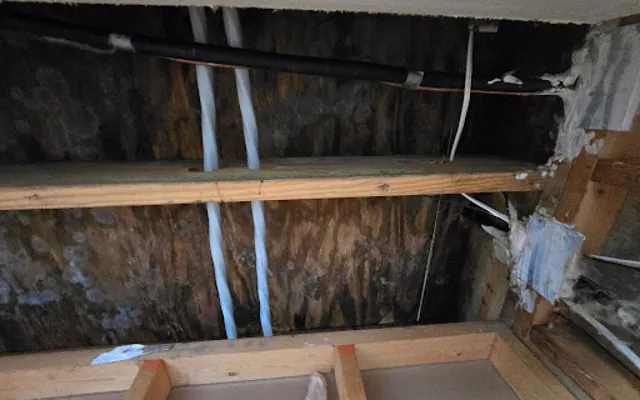
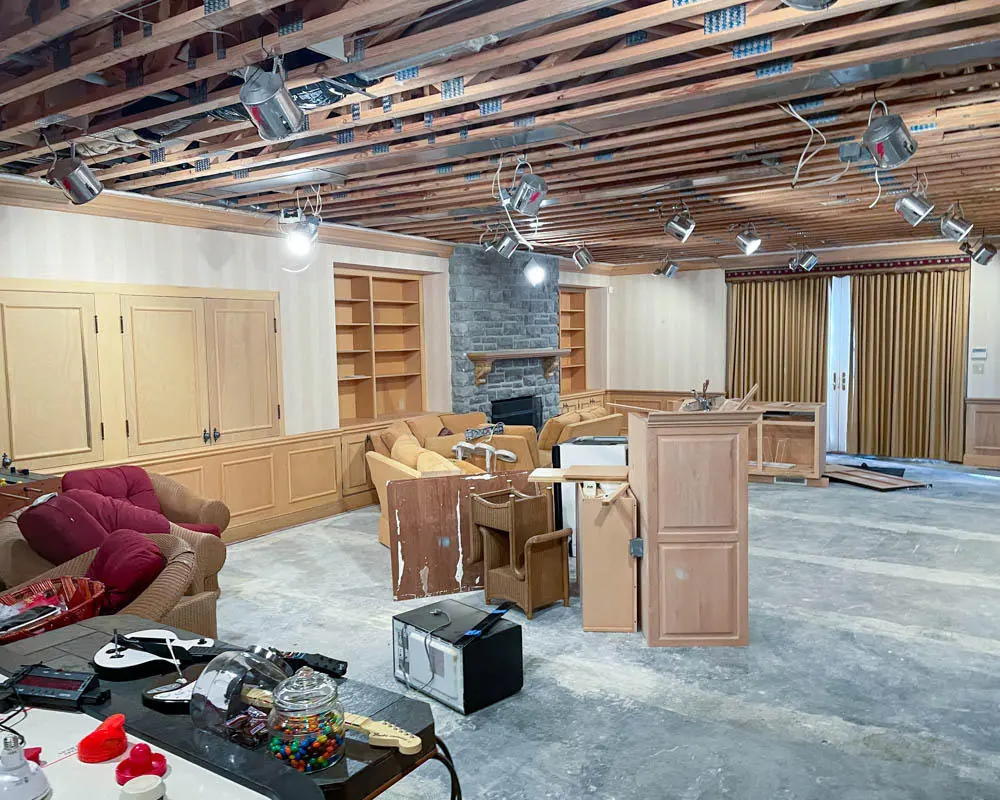
Storm roof leaks and air-handler condensation soak attic insulation and framing, and in Lafayette's heat that trapped moisture turns to mold fast. Local crews respond 24/7 to dry the attic before the damage works down into the ceilings.

Crews inspect the attic to determine whether the water is coming from the roof, the air handler and condensate line, or duct condensation.
The source is addressed, from tarping the roof to clearing a clogged condensate line, so the attic can dry without re-wetting.
Soaked, matted insulation is removed since it holds moisture and has lost its value, exposing the decking and framing for drying.
Air movers and dehumidifiers dry the decking and framing to a verified target, and surfaces are treated with antimicrobial where needed.

While help is on the way, these first steps, done only where it is safe, limit the damage and protect the insurance claim.
Shut the supply off at the source, or close the home's main valve if the source is not obvious. Stopping the flow limits the damage more than anything else.
Switch off electricity to the affected area, but only if the breaker can be reached without standing in or touching the water.
Get a crew dispatched right away. The sooner extraction and drying begin, the more flooring, drywall, and belongings can be saved.
Take photos and a short video of the water and the affected rooms before anything is moved, so the insurance claim starts strong.
Attic water damage cleanup in Lafayette typically runs $1,000 to $4,500, depending on how much insulation is soaked, whether the decking and framing took damage, and how much drying and treatment the space needs. A contained condensate leak sits at the low end; a storm-soaked attic with wet decking costs more. Sudden causes like a storm leak or an HVAC failure are usually covered; the loss is documented for your adjuster.
Crews reach Lafayette and Acadiana fast, from Downtown, the Saint Streets, and Freetown-Port Rico to Youngsville, Broussard, Carencro, Scott, and Breaux Bridge. See the full list on the areas served across Lafayette page.
See all areas servedEvery loss is photographed, measured, and logged from the first visit, so the paperwork holds up with your insurance carrier.
Technicians follow recognized IICRC drying standards and prove the work with daily moisture readings, not guesswork.
Emergency dispatch any hour of the day or night, with a real crew on the way, not a callback in the morning.
A real crew dispatched any hour, not a callback in the morning.
Trained technicians following recognized IICRC drying standards.
Truck-mounted, portable, and submersible for any size loss.
The loss is documented and billed to the carrier directly.
Most often from a storm roof leak past worn flashing or shingles, or from the HVAC, a clogged condensate line or a sweating duct dripping into the insulation. Crews inspect to determine which before drying.
Soaked, matted insulation loses its value and holds moisture against the framing, which slows drying and invites mold in the heat. Removing and replacing it is what lets the attic actually dry.
Quickly. An unventilated attic in the Acadiana summer bakes trapped moisture, and mold can take hold within days. Fast removal of wet materials and drying is the key to preventing it.
Sudden causes such as a storm roof leak or an HVAC failure are usually covered, while long-term wear often is not. The cause and damage are documented thoroughly to support the claim.
Yes, if it is not addressed. Water and mold in the attic work downward into the ceilings, staining and eventually sagging the drywall, so drying the attic protects the living space beneath it.
Lafayette crews are on call 24 hours a day, local and fast, and can be on the way within the hour.
Call (337) 614-6808