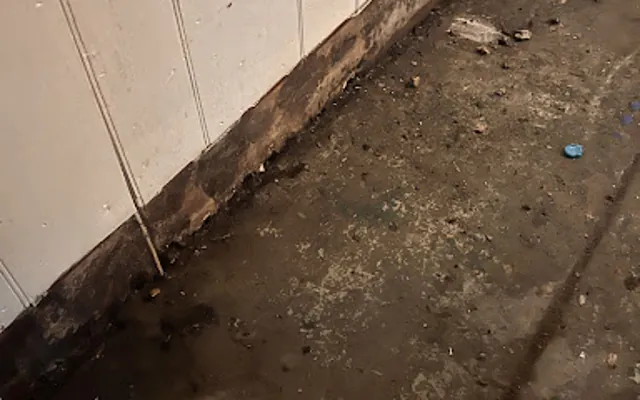
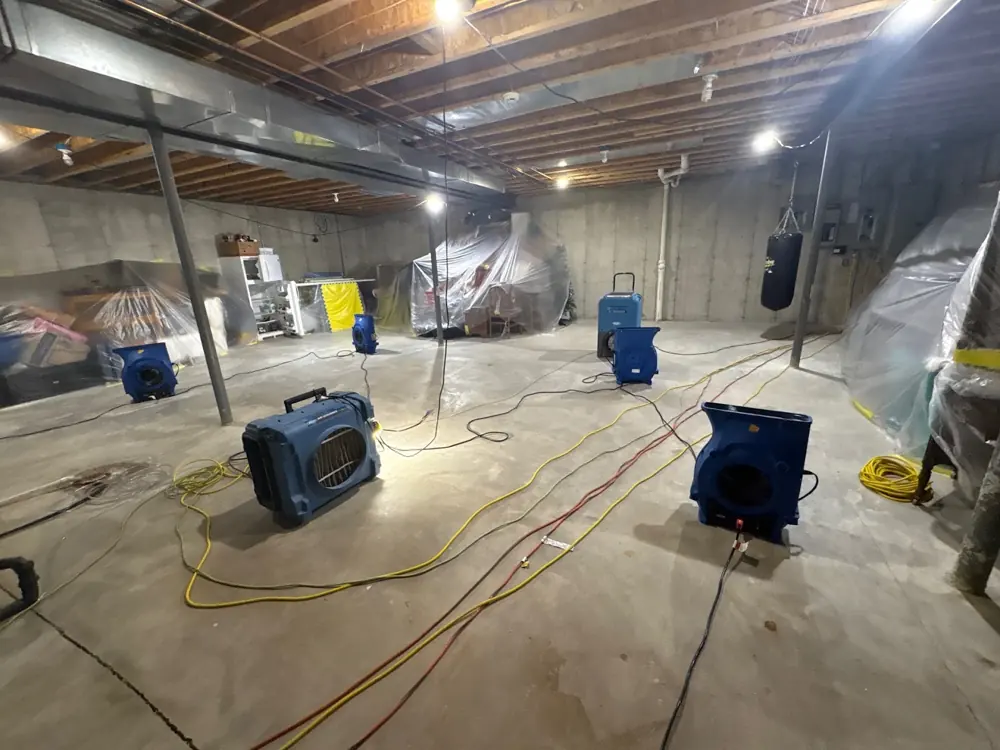
In Lafayette's rural areas, a high water table and heavy rain can overwhelm a septic system and back category 3 waste into the home. Local crews respond 24/7 to remove it safely, sanitize, and dry the affected space.

The affected area is contained, crews suit up in protective gear, and the extent of the category 3 contamination is mapped.
The waste is extracted, and porous materials it soaked, carpet, pad, and lower drywall, are removed and bagged for disposal.
Every hard surface the waste reached is cleaned and treated with antimicrobial, and the framing and slab are disinfected.
Air movers and dehumidifiers dry the structure to a moisture-verified target, logged daily until the space tests dry and safe.

While help is on the way, these first steps, done only where it is safe, limit the damage and protect the insurance claim.
Shut the supply off at the source, or close the home's main valve if the source is not obvious. Stopping the flow limits the damage more than anything else.
Switch off electricity to the affected area, but only if the breaker can be reached without standing in or touching the water.
Get a crew dispatched right away. The sooner extraction and drying begin, the more flooring, drywall, and belongings can be saved.
Take photos and a short video of the water and the affected rooms before anything is moved, so the insurance claim starts strong.
Septic backup cleanup in the Lafayette area typically runs $2,500 to $8,000, depending on how far the contamination spread, how much porous material has to be removed, and how much sanitizing and drying is required. This covers the water-damage cleanup; pumping or repairing the septic system itself is separate. Many homeowner policies cover sudden backups, sometimes with an endorsement; the loss is documented for your adjuster.
Crews reach Lafayette and Acadiana fast, from Downtown, the Saint Streets, and Freetown-Port Rico to Youngsville, Broussard, Carencro, Scott, and Breaux Bridge. See the full list on the areas served across Lafayette page.
See all areas servedEvery loss is photographed, measured, and logged from the first visit, so the paperwork holds up with your insurance carrier.
Technicians follow recognized IICRC drying standards and prove the work with daily moisture readings, not guesswork.
Emergency dispatch any hour of the day or night, with a real crew on the way, not a callback in the morning.
A real crew dispatched any hour, not a callback in the morning.
Trained technicians following recognized IICRC drying standards.
Truck-mounted, portable, and submersible for any size loss.
The loss is documented and billed to the carrier directly.
Often because Acadiana's high water table and heavy rain saturate the ground so the drainfield cannot absorb effluent, which pushes waste back toward the house. A full or failing tank, a clogged line, or roots make it more likely.
Yes. It is category 3 black water carrying bacteria and health hazards, and it needs protective gear, containment, safe removal of contaminated materials, and thorough sanitizing, not just cleaning up the water.
Crews handle the water-damage cleanup, the safe removal, sanitizing, and drying. Pumping or repairing the tank and drainfield is done by a septic professional, and the two are coordinated so the home is safe and the system is restored.
Many homeowner policies cover sudden backups, often through a specific endorsement, though coverage varies. The cause and damage are documented thoroughly to support the claim.
Have the tank pumped on schedule, avoid overloading the system during wet weather, keep roots away from the field, and address slow drains early. In a high water table, managing water use during heavy rain helps.
Lafayette crews are on call 24 hours a day, local and fast, and can be on the way within the hour.
Call (337) 614-6808