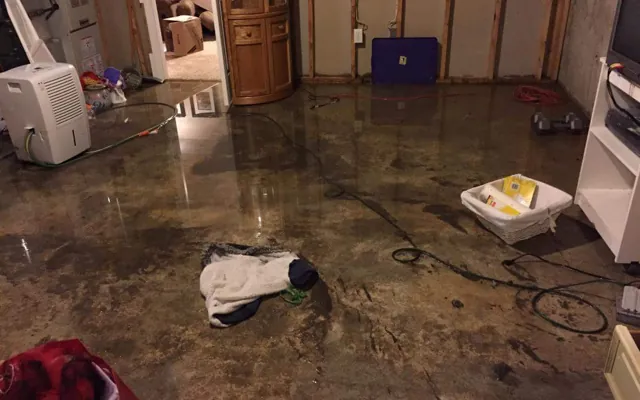
A failed water heater can dump forty gallons or more onto the floor and keep feeding the leak until it is shut off. Local crews respond 24/7 across Lafayette to extract the water and dry the surrounding structure fast.

Crews shut the water and power to the heater and isolate it so no more water or hazard feeds the leak.
Standing water is pulled from the floor, and moisture readings map how far it spread into walls, flooring, and adjacent rooms.
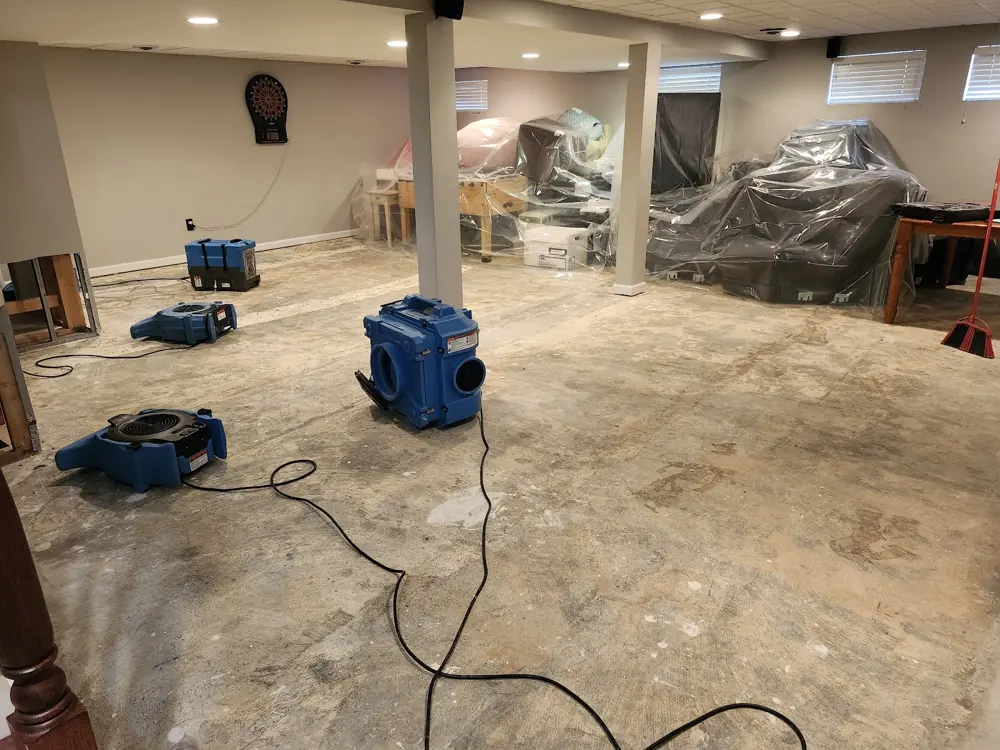
Wet baseboards and lower drywall are opened as needed, and air movers and dehumidifiers dry the framing and flooring to a verified target.
The failed heater can be swapped out, and a drain pan or leak sensor is recommended so a future failure is caught early.

While help is on the way, these first steps, done only where it is safe, limit the damage and protect the insurance claim.
Shut the supply off at the source, or close the home's main valve if the source is not obvious. Stopping the flow limits the damage more than anything else.
Switch off electricity to the affected area, but only if the breaker can be reached without standing in or touching the water.
Get a crew dispatched right away. The sooner extraction and drying begin, the more flooring, drywall, and belongings can be saved.
Take photos and a short video of the water and the affected rooms before anything is moved, so the insurance claim starts strong.
Water heater leak cleanup in Lafayette typically runs $1,000 to $4,000, depending on where the heater sits, how long it leaked, and how much flooring and wall material the water reached, with heater replacement separate. An attic or upstairs failure that drips through a ceiling costs more than a contained garage leak. Sudden tank failures are usually a covered homeowner claim, documented for your adjuster.
Crews reach Lafayette and Acadiana fast, from Downtown, the Saint Streets, and Freetown-Port Rico to Youngsville, Broussard, Carencro, Scott, and Breaux Bridge. See the full list on the areas served across Lafayette page.
See all areas servedEvery loss is photographed, measured, and logged from the first visit, so the paperwork holds up with your insurance carrier.
Technicians follow recognized IICRC drying standards and prove the work with daily moisture readings, not guesswork.
Emergency dispatch any hour of the day or night, with a real crew on the way, not a callback in the morning.
A real crew dispatched any hour, not a callback in the morning.
Trained technicians following recognized IICRC drying standards.
Truck-mounted, portable, and submersible for any size loss.
The loss is documented and billed to the carrier directly.
A tank holds forty to fifty gallons, and because it stays connected to the supply, it keeps flowing after it empties until the water is shut off. That is why a failure can flood several rooms if it happens while no one is home.
Shut off the water supply to the heater, or the main if you cannot reach it, and turn off its power or gas. Then call for extraction. Catching it early keeps the water from spreading into walls and flooring.
Yes, and it is often worse, because the water soaks the insulation and drips through the ceiling below. A pan with a drain line and a leak sensor are worth adding for any elevated or attic heater.
Sudden tank failures are usually covered by homeowner policies, while a slow leak that was ignored may not be. The heater itself is typically not covered, but the resulting water damage often is; the loss is documented for the claim.
Often eight to twelve years, though Lafayette's hard water can shorten that. Flushing the tank periodically and watching for rust or moisture at the base helps catch a failure before it floods.
Lafayette crews are on call 24 hours a day, local and fast, and can be on the way within the hour.
Call (337) 614-6808