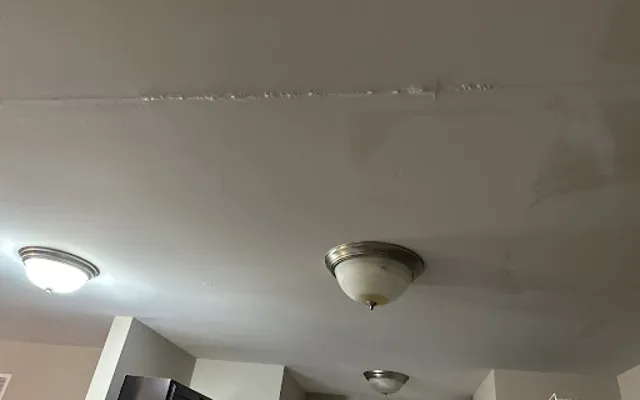
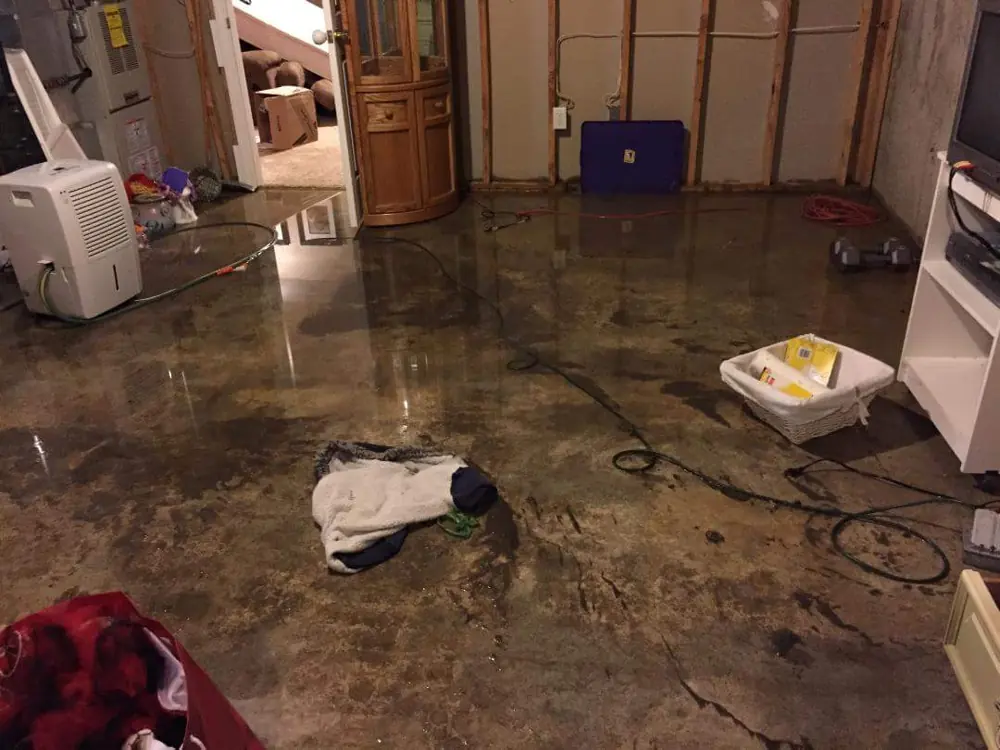
A stained, sagging ceiling usually means water traveling from a leak a room or two away. Local crews respond 24/7 across Lafayette to find the source and dry the ceiling out before it fails.

Crews use moisture meters and thermal imaging to find where the water is really coming from, whether it is the roof, a line above, or condensation.
The active source is addressed, from tarping a roof to shutting a line, so drying is not undone by the next leak.
A lightly affected ceiling is dried in place; saturated or sagging drywall is removed so the cavity and framing can be dried safely.
Once readings confirm dry, drywall, texture, and paint are restored so the ceiling matches the rest of the room.

While help is on the way, these first steps, done only where it is safe, limit the damage and protect the insurance claim.
Shut the supply off at the source, or close the home's main valve if the source is not obvious. Stopping the flow limits the damage more than anything else.
Switch off electricity to the affected area, but only if the breaker can be reached without standing in or touching the water.
Get a crew dispatched right away. The sooner extraction and drying begin, the more flooring, drywall, and belongings can be saved.
Take photos and a short video of the water and the affected rooms before anything is moved, so the insurance claim starts strong.
Ceiling water damage in Lafayette typically runs $700 to $3,500, depending on how large the affected area is, whether the drywall can be dried or must be replaced, and how hard the source is to reach. A small dried-in-place stain sits at the low end; a sagging ceiling that has to come down and be rebuilt costs more. Sudden causes like a storm or a burst line are usually covered; the loss is documented for your adjuster.
Crews reach Lafayette and Acadiana fast, from Downtown, the Saint Streets, and Freetown-Port Rico to Youngsville, Broussard, Carencro, Scott, and Breaux Bridge. See the full list on the areas served across Lafayette page.
See all areas servedEvery loss is photographed, measured, and logged from the first visit, so the paperwork holds up with your insurance carrier.
Technicians follow recognized IICRC drying standards and prove the work with daily moisture readings, not guesswork.
Emergency dispatch any hour of the day or night, with a real crew on the way, not a callback in the morning.
A real crew dispatched any hour, not a callback in the morning.
Trained technicians following recognized IICRC drying standards.
Truck-mounted, portable, and submersible for any size loss.
The loss is documented and billed to the carrier directly.
Water enters higher up and follows the framing before dropping onto the ceiling, so the stain often shows up a room or two from the source. Crews use thermal imaging to trace it back to where the water is really entering.
Yes. A water-saturated ceiling gets heavy and can pull loose at the seams and fasteners, and a sagging section can come down. It is best to stay clear of it and get the area dried and assessed quickly.
Sometimes. A lightly affected ceiling can be dried in place, but saturated or sagging drywall usually has to be removed so the cavity and framing can be dried safely and mold prevented.
Sudden causes such as a storm roof leak or a burst line above are usually covered, while long-term wear often is not. The cause and damage are documented thoroughly to support the claim.
The source has to be fixed, not just the drywall. Whether it is a roof repair or a plumbing fix, addressing the real cause is the only way to keep the same spot from bubbling after the next rain.
Lafayette crews are on call 24 hours a day, local and fast, and can be on the way within the hour.
Call (337) 614-6808