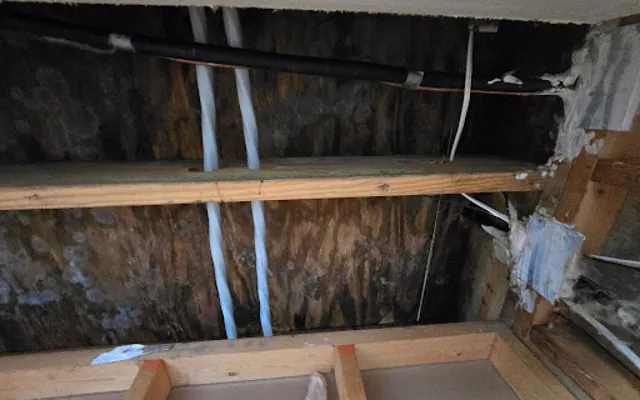
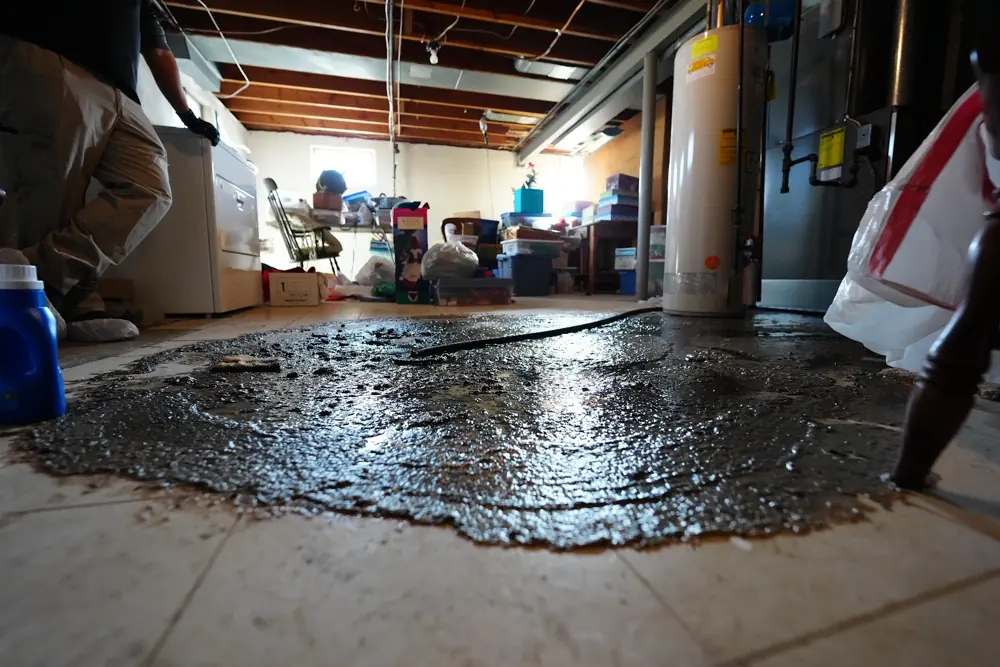
Ice dams are a cold-climate problem and are essentially unheard of in Lafayette's subtropical winters. On the very rare hard-freeze night, though, ice can form at a roof edge or a clogged gutter, and if that leads to a leak, local crews respond 24/7 to dry it out.

Crews locate where water got past the roof edge or gutter and trace how far it traveled into the soffit, attic, or ceiling.
Any ice or blockage is cleared and the intrusion point is covered so the area can dry without re-wetting on the next thaw or rain.
Soaked insulation and unsalvageable drywall are removed, and air movers and dehumidifiers dry the framing and cavity to a verified target.
Once readings confirm dry, insulation, drywall, and paint are restored so the ceiling and soffit look the way they did before.

While help is on the way, these first steps, done only where it is safe, limit the damage and protect the insurance claim.
Shut the supply off at the source, or close the home's main valve if the source is not obvious. Stopping the flow limits the damage more than anything else.
Switch off electricity to the affected area, but only if the breaker can be reached without standing in or touching the water.
Get a crew dispatched right away. The sooner extraction and drying begin, the more flooring, drywall, and belongings can be saved.
Take photos and a short video of the water and the affected rooms before anything is moved, so the insurance claim starts strong.
Because ice dams are essentially a non-event in Lafayette, this is a very uncommon call. If a rare winter roof-edge leak does occur, the cleanup usually resembles a roof-leak job and runs $1,000 to $4,000, depending on how much insulation, framing, and ceiling is affected. Sudden, weather-driven intrusion is often covered by homeowner policies, and the loss is documented for your adjuster.
Crews reach Lafayette and Acadiana fast, from Downtown, the Saint Streets, and Freetown-Port Rico to Youngsville, Broussard, Carencro, Scott, and Breaux Bridge. See the full list on the areas served across Lafayette page.
See all areas servedEvery loss is photographed, measured, and logged from the first visit, so the paperwork holds up with your insurance carrier.
Technicians follow recognized IICRC drying standards and prove the work with daily moisture readings, not guesswork.
Emergency dispatch any hour of the day or night, with a real crew on the way, not a callback in the morning.
A real crew dispatched any hour, not a callback in the morning.
Trained technicians following recognized IICRC drying standards.
Truck-mounted, portable, and submersible for any size loss.
The loss is documented and billed to the carrier directly.
Essentially no. Ice dams need sustained freezing temperatures and snow on the roof, and Lafayette gets neither in a normal winter. Measurable snow is a rare, years-apart event, so true ice dams are not a realistic local concern.
Because on the handful of hard-freeze nights each year, minor ice at a roof edge or a clogged gutter can occasionally force water inside. That rare intrusion is handled like any roof-edge leak, and honesty about how uncommon it is matters.
A frozen and split pipe, or a plain storm roof leak. Most winter water calls in Lafayette trace back to those, not ice on the roof, so those are usually the right pages to look at.
Sudden, weather-driven water intrusion is often covered by homeowner policies, while damage from neglected gutters or wear may not be. The cause and damage are documented thoroughly to support the claim.
Keep gutters and downspouts clear so water and any brief ice can drain, and address worn flashing or shingles. Good drainage handles both the rare cold snap and the far more common Acadiana rain.
Lafayette crews are on call 24 hours a day, local and fast, and can be on the way within the hour.
Call (337) 614-6808