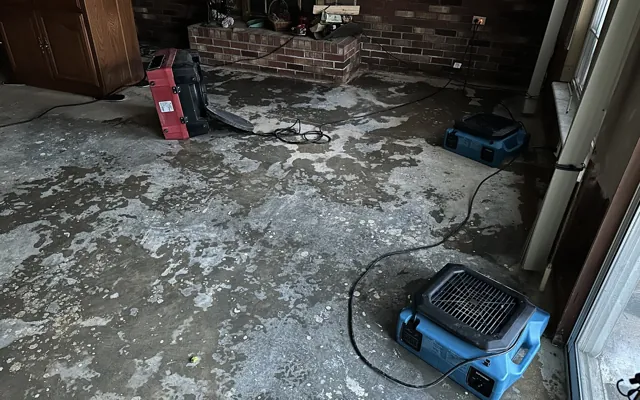
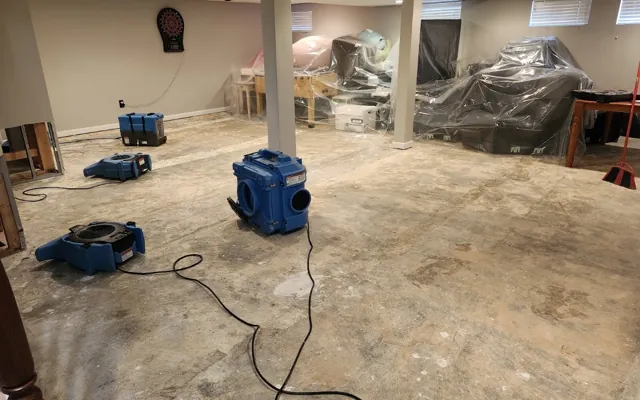
After a storm flood in Sterling Grove, LA, prompt local crews follow IICRC-standard methods to extract water, remove contamination, and restore historic homes to a dry, safe state.

In Sterling Grove homes, standing water and mud are removed with powerful pumps. This initial muck-out is critical to reach the original wood framing and slab, which must be assessed for hidden saturation.
Floodwater is considered contaminated. Soaked drywall, insulation, and carpets are cut out and disposed of properly. This step protects the historic structure and its occupants from bacteria and pollutants.
Exposed surfaces are cleaned and treated with antimicrobial solutions. Then, industrial air movers and dehumidifiers run until daily moisture readings confirm the home is dry to the IICRC standard for the humid climate.

Storm and flood cleanup in Sterling Grove typically runs $2,500 to $8,000 or more, driven by how deep the water got, how much contaminated material has to be removed, and how large the home is. Category 3 floodwater means more removal and sanitizing than a clean-water loss. Note that rising water from outside is usually covered by a separate flood policy rather than a standard homeowner policy; crews document everything either way for the claim.
Sterling Grove's 19th-century wood-framed homes, some of the oldest in Lafayette, present a unique challenge when floodwater intrudes. Hidden leaks can travel through original studs and joists for weeks before a stain appears, meaning damage is often more extensive than first seen after a major storm on the coastal plain. Sterling Grove sits on the flat, flood-prone plain along the Vermilion River. Its historic homes have decades-old plumbing and layered renovations, which can hide leaks, while the humid subtropical climate makes rapid drying after a flood essential to prevent mold. From Sterling Grove, crews also cover nearby Saint Streets, Freetown-Port Rico, La Place, Oil Center, Downtown Lafayette, McComb-Veazey. See every neighborhood and town on the full service area page.
See all areas servedEvery loss is photographed, measured, and logged from the first visit, so the paperwork holds up with your insurance carrier.
Technicians follow recognized IICRC drying standards and prove the work with daily moisture readings, not guesswork.
Emergency dispatch any hour of the day or night, with a real crew on the way, not a callback in the morning.
A real crew dispatched any hour, not a callback in the morning.
Trained technicians following recognized IICRC drying standards.
Truck-mounted, portable, and submersible for any size loss.
The loss is documented and billed to the carrier directly.
Typically, rising water from outside requires a separate flood insurance policy. Standard homeowners policies often cover storm-related water from a roof leak. Local crews document everything thoroughly to support whichever type of claim may apply for Sterling Grove properties.
In Sterling Grove's historic homes with dense, old-growth timber, drying often takes 3 to 5 days or longer. Crews use commercial equipment and take daily moisture readings in the framing and subfloor until everything meets the IICRC dry standard for the local climate.
Crews are on call 24 hours a day and can be on the way to Sterling Grove within the hour.
Call (337) 614-6808